

In the world of modern logistics, the ability to predict events equals power. But if we want to do that, we need tools designed to deal with complexity in real time, to troubleshoot and prevent issues from arising in the first place and test solutions without incurring the risk of production downtime. This is where the concept of digital twins comes in. It is literally revolutionising the way we design and manage our warehouses.
It is worth pointing out that the concept of digital twins is already widespread in many sectors. It uses simulation to digitally reconstruct physical objects and test them under changing conditions to observe an actual (or desired) outcome. This interesting tool is used in the most disparate settings. For example, this technology can be used in medicine to reconstruct a patient’s heart (or even their whole body) using their medical data to see what happens when stress is applied or when a patient makes certain lifestyle choices (excessive sugar consumption or not drinking for days) without actually having to subject the heart to danger or risk. In an industrial setting, the same solution is deployed for machine tools to predict wear-and-tear and consumption, or in the motoring field to implement new business models. If someone knows an asset inside out, like plane engines, this knowledge can be used to build a virtual model and recommendations can be made about optimal use (and consumption levels) so they can be sold not as a product, but for the number of hours actually rendered.
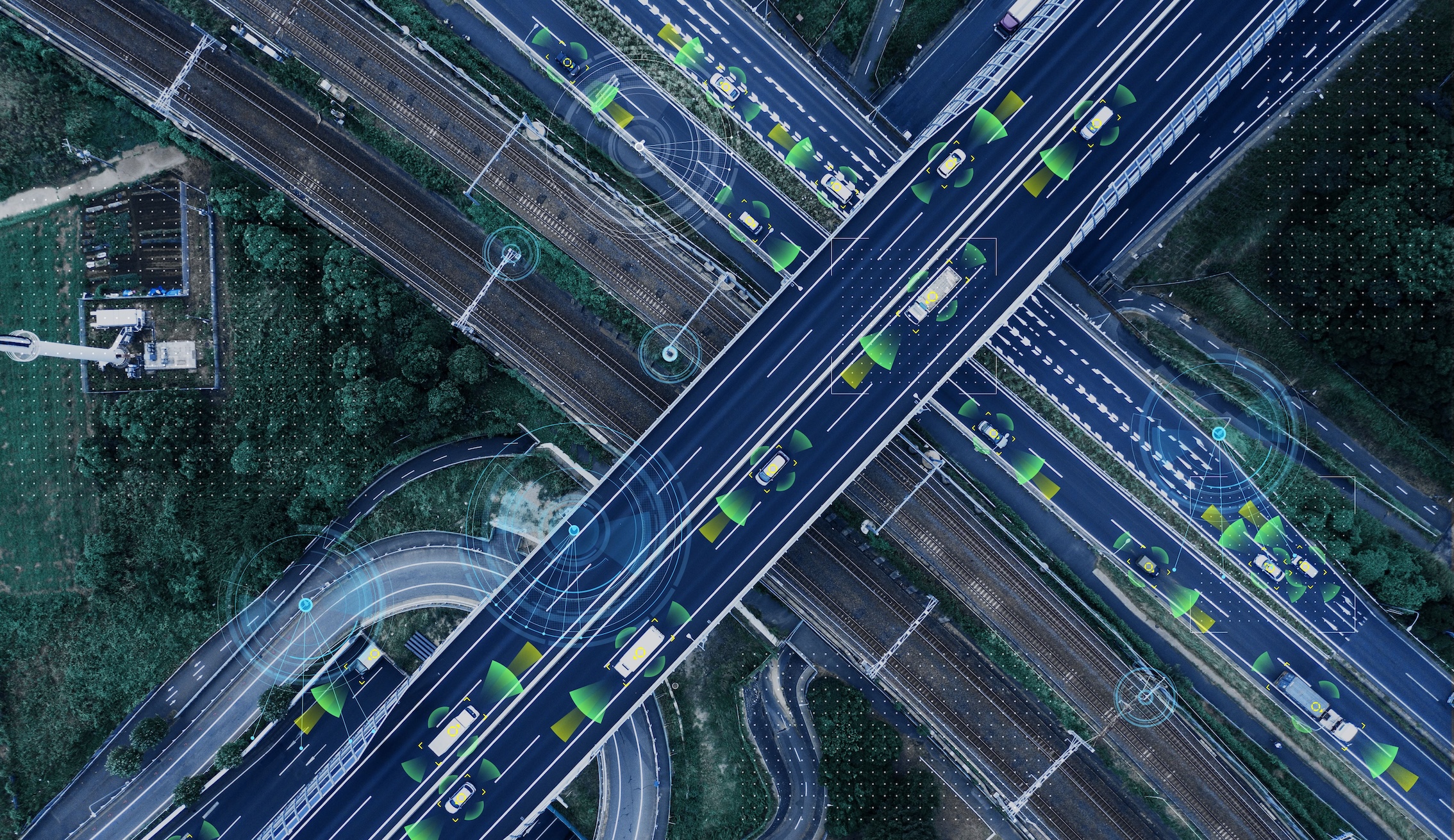
So, generally speaking, a digital twin is not displayed as a simple 3D model or a static simulation, but rather a dynamic synchronised replica of a piece of equipment, a body or an asset, or even a city. This image is fed with data in real time streamed from sensors, PLCs, management systems and control software (or any other data-generating touchpoint). In the case of a warehouse, a digital twin becomes a living virtual environment in which each handling operation, each delay and each anomaly can be accurately detected, traced and analysed.
This technology is being applied across an entire warehouse life cycle. During the design stage, it allows operators to test layout effectiveness, assess the impact of various levels of automation, mimic operational scenarios with differing volumes, work shifts or merchandise mixes. In practice, it is possible to “try out” the warehouse before it is even built, optimising structural choices and reducing the risk of design errors. It is no coincidence that it is often used as a marketing tool to showcase the value of given choices or the performance levels of solutions.
But digital twins fulfil their full potential when leveraged for everyday routine purposes. When linked to field systems, they receive data in real time and allow for constant performance monitoring: material flows, loading-bay saturation, travel times and aisle congestion. Thus, digital twins serve as a control booth that allows for prompt intervention when inefficiency or hitches occur while providing operators with an up-to-date view of the logistics system.
It can even be integrated with artificial-intelligence and machine-learning algorithms to provide historical or behaviour-based forecasting. For instance, it can anticipate bottlenecks on critical days, suggest stock reallocation or propose an alternative to the order-filling schedule according to available resources. In essence, it can be a sophisticated decision-making assistant that helps logistics managers draw up more informed and efficient strategies.
Another key aspect regards equipment maintenance. With a digital twin, predictive maintenance gains remarkable accuracy. The system is able to recognise anomalous behaviour in mechanical components or automatisms with uncanny precision, forecasting when a breakdown is likely and suggesting repair work before the machine actually fails.
Naturally, in order to work properly, a digital twin requires a solid data infrastructure able to link the various information sources and provide updates in real time. An increasing number of companies are making investments in this sense, encouraged by the dissemination of Edge Computing and industrial IoT platforms which facilitate information acquisition and local data processing.
The whole phenomenon is driven by a change in mindset. The advent of digital twins on the market is not just a question of technology; it is a marker of cultural progress. Society has transitioned from a reactive approach to a predictive one. We no longer compartmentalise management operations; we have an integrated systemic view of intralogistics.
In a context where efficiency is increasingly linked to flexibility and adaptability, digital twins are one of the most promising pieces of innovation, seemingly set to transform warehouses from static depots to smart systems programmed to self-monitor, streamline themselves and improve over time. This is not science fiction. It is the new normal for anyone who wants to keep their competitive edge in the world of 4.0 logistics.
This might be oversimplifying the situation. It should be pointed out that a considerable lag between theory and practice still exists. A warehouse is a complex entity and identifying meaningful data and creating algorithms to detect patterns in order to foresee phenomena is no mean feat. On top of all this, no one warehouse is the same as another. For instance, two identical machines in different locations will not act in the same way over time. This shows the level of complexity and endless variables involved. It is hugely difficult to align a series of data-generating machinery with information that needs to be harmonised and read; what must be avoided is a kind of whispering game where an initial message turns into something entirely different at the end of the chain. This highlights how important it is for numerical analysis and artificial intelligence to be backed by a broad array of traditional skills and human intelligence; a combination of the two will sidestep standardised responses and give rise to solutions as yet uncoded.