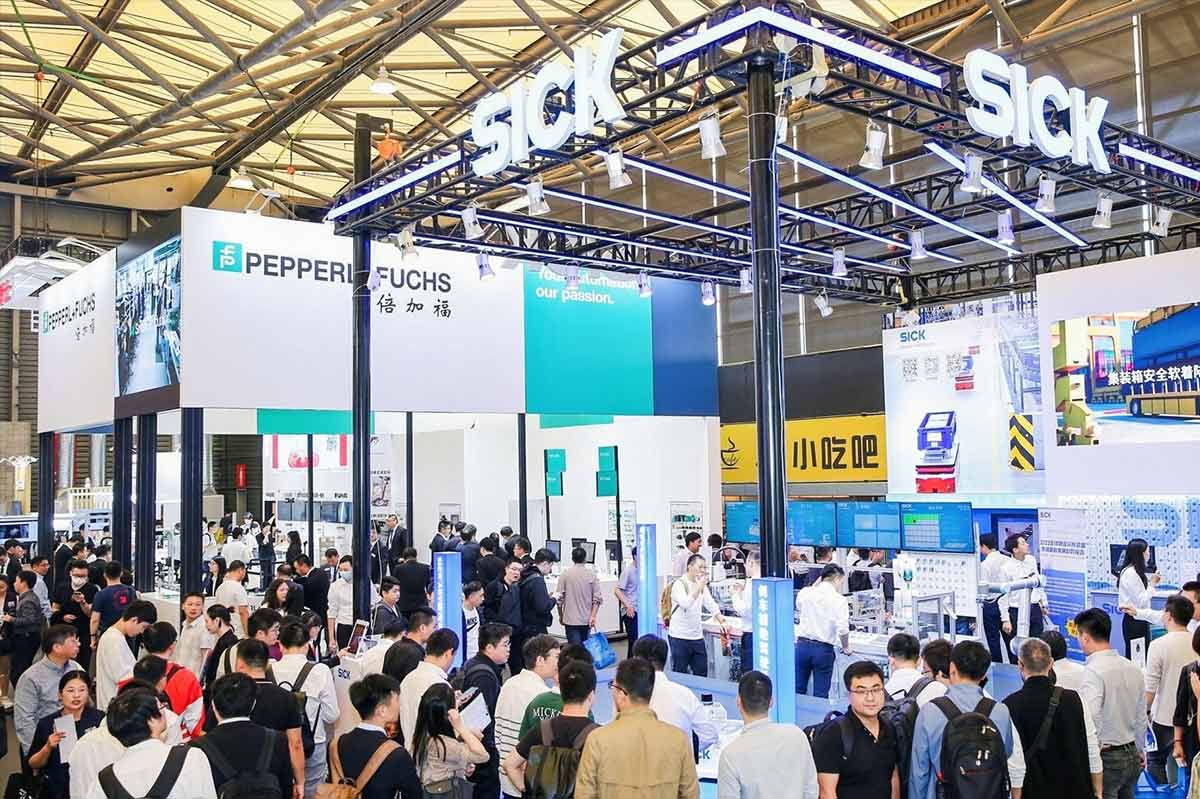

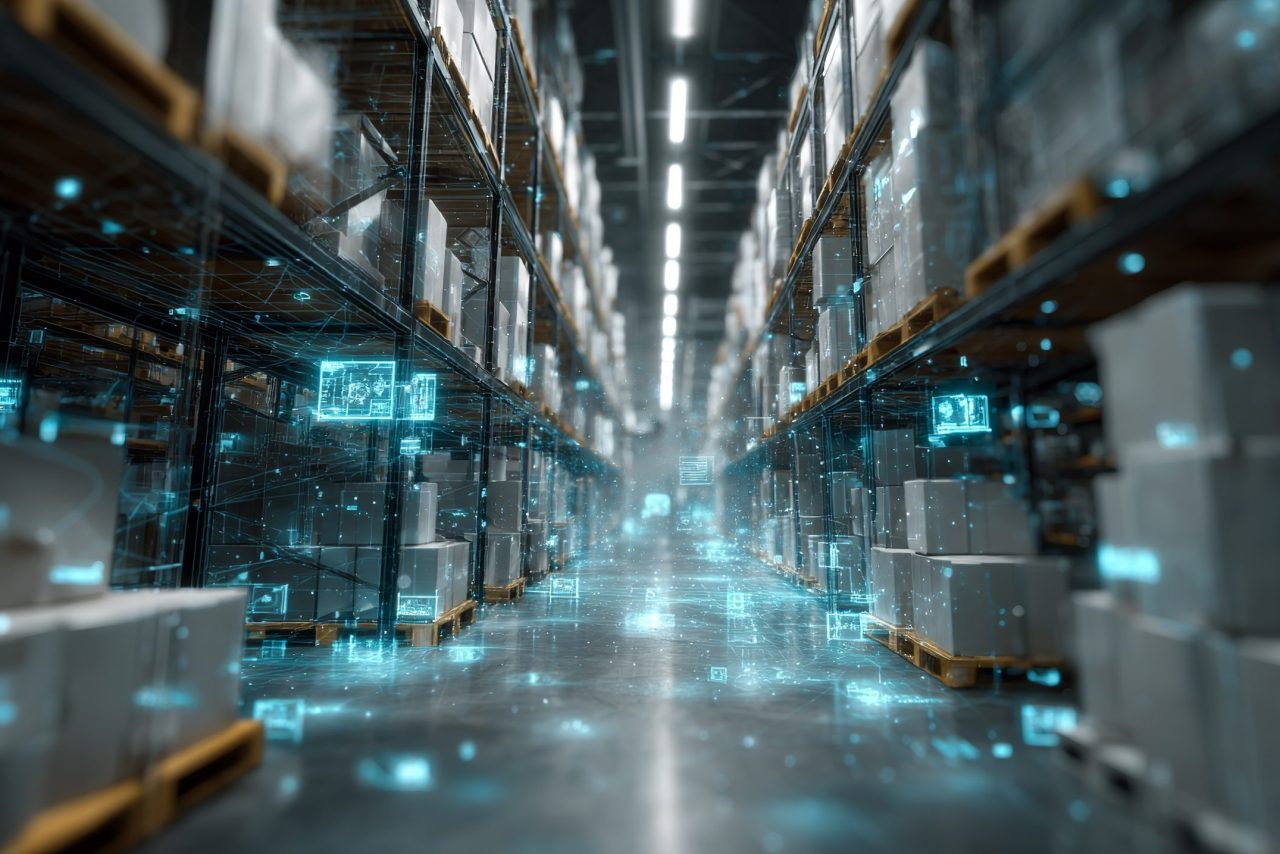
At CeMAT Asia, “goods-to-person” and “tote-to-person” automation has proven to be a pillar of smart logistics. Systems that bring the goods to the operator, instead of forcing them to move, are now accessible even to SMEs thanks to modularity: small scalable plants that grow with the business. Shuttles, AMRs, carousels, and orchestration software are shaping the future of warehouses.
In recent years, the logistics paradigm has taken a decisive step. Instead of making operators move along endless aisles, more and more solutions bring the goods, or the containers holding them, directly to the picking station. At the last CeMAT Asia, this approach, known as goods-to-person, was no longer presented as a promise of efficiency, but as a concrete and now established reality. At the same time, the tote-to-person variant focuses on moving containers (totes, bins), which are automatically brought to the operator to reduce idle time and improve ergonomics and accuracy. The result is faster picking, fewer errors, and more rational use of space.
Until a few years ago, these solutions were the domain of large hubs and ultra-high-productivity warehouses. Today, the most interesting novelty is their availability even for small and medium-sized enterprises. The key to this evolution is modularity: the ability to start with a small plant and then expand it progressively, without having to redesign the entire logistics infrastructure. The ability to grow gradually makes the investment more accessible and reduces the typical risk of complex projects.
Beyond this, there is flexibility in the sense of the ability to work with different products, another important advantage in a highly volatile world.
The solutions
The technological variations observed at the fair are numerous. Shuttles and mini-shuttles represent a high-density solution capable of moving crates or containers along dedicated aisles and delivering them quickly to picking stations. Solutions that were highly appreciated by visitors, as were fleets of AMRs, autonomous mobile robots, known for their flexibility. They can move entire shelves or individual containers and integrate them into existing flows with minimal disruption. In addition, the fleets can be easily increased during peak periods without increasing fixed costs and without the risk of becoming locked into technologies that will soon be outdated. Compact shelf-to-person systems also meet the needs of urban micro-fulfillment, where space is limited but order fulfillment speed remains crucial. To these families of solutions are added carousels and vertical lifts. The former are automated storage systems composed of shelves or trays that rotate on a vertical or horizontal structure, like a mechanical carousel: in response to a command, the shelf containing the requested item automatically moves to the operator’s height, eliminating unnecessary movements and making the most of warehouse volume. The latter exploit the height of the warehouse to reduce the footprint. Both, in the cases seen at the fair, can easily communicate with shuttles and AMRs to create hybrid systems. It is clear that the operator’s role remains central but relieved of the most strenuous tasks.
Alongside the hardware component, the value of software integration is becoming increasingly clear. Orchestration systems—WMS, WES (Warehouse Execution System), fleet managers, and digital twins—have become indispensable for fully leveraging the potential of these technologies. Indeed, it is no longer enough to bring a container in front of the operator; it is necessary to manage priorities, optimize routes, simulate scenarios, and adapt the warehouse capacity in real time to fluctuations in demand.
Designing modularity
The theme of modularity translates into concrete advantages. Financially, it allows the investment to be spread over time, ensuring a quicker return. Operationally, it enables the introduction of pre-assembled solutions that can be easily integrated without halting operations. In addition, the ability to increase or decrease capacity and automation based on seasonality reduces the impact of work peaks. Even space optimization, increasingly costly in urban areas, benefits from scalable solutions that combine shuttles and vertical storage.
For an SME considering this path, the journey begins with a thorough analysis of flows and product types, moves through defining a “first step” aimed at solving the main bottleneck, and requires choosing interoperable technologies capable of growing without becoming a dead end. Fundamental, in this sense, is planning scalability, which must be designed not only in terms of hardware but also digital infrastructure, energy, and future space. For this reason, when designing a warehouse, it is important to look at today while thinking about the day after tomorrow.
Challenges to address
However, there are critical issues to manage. Software integration remains the most complex challenge: without a unified control, the efficiency promised by these systems may be significantly reduced. One of the most frequent problems is having software capable of optimizing individual parts of the warehouse as if they were separate areas rather than a single body. The most common case is the robot cage, optimized internally, perhaps even with AI elements and highly sophisticated software, but not integrated upstream and downstream with the rest of the warehouse, resulting in evident efficiency losses.
Energy management also requires new charging and monitoring strategies, especially with constantly moving robotic fleets (it is no coincidence that there is a lot of work on new batteries, not only for this sector).
Finally, the human aspect should not be underestimated: the introduction of automation requires targeted training, role redefinition, and the ability to manage predictive maintenance as an integral part of operations.
Goods-to-person and tote-to-person automation now seems to have reached technological and organizational maturity to become accessible to many SMEs. Technological flexibility is accompanied by financial feasibility, allowing, on one hand, the investment to be spread out and, on the other, the implementation of new business models. In any case, for now, the real leap in quality does not lie solely in mechanics or robotics but in the modular approach: a model that allows step-by-step scaling, testing, measuring, and improving without disrupting business processes.