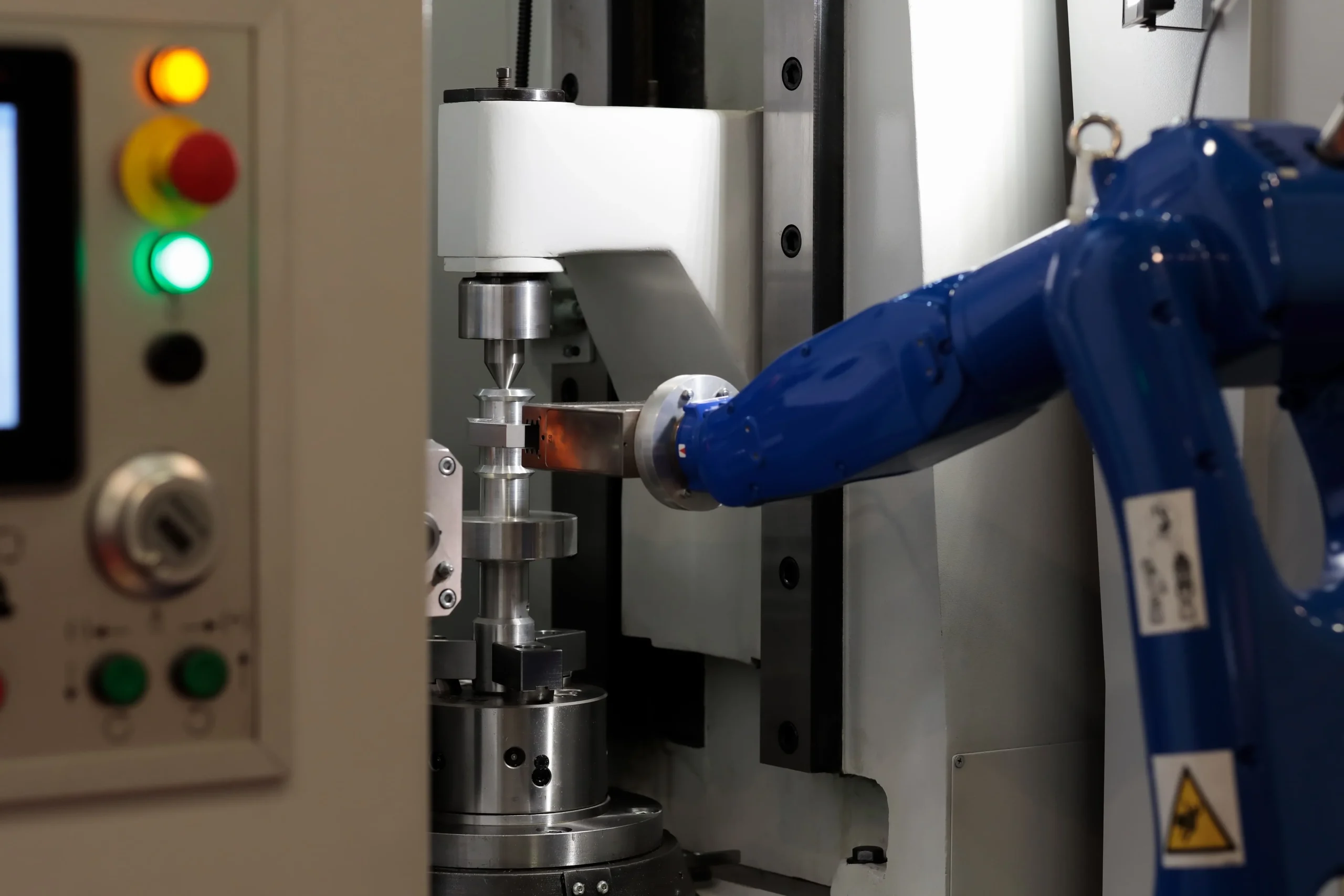



For decades, industrial automation has been the preserve of the elect few. Highly specialised engineers, PLC programmers and system integrators have long hogged the scene. Today, a new wave of technology is sweeping the world, bringing democracy to the way people design and manage facilities. It is called low-coding/no-coding and it is a silent revolution that will mean more agility, more autonomy and less reliance on expensive skilled technicians who are difficult to find on the market.
What is low-coding/no-coding in automation?
In the IT-world, low-coding and no-coding are already an established fact. Basically, they are platforms that allow users to develop software and applications by dragging-and-dropping graphical blocks without having to write one single line (or almost) of code. In industrial terms, the principle is the same: simplifying and accelerating the programming of equipment, HMI interfaces, process logics and even robots. These tools enable technicians with a mechanical or electrical background to configure automation sequences, create dashboards or change production flows without having to master complex languages such as ladder, ST or SCL.
Where is it applied?
Low-code and no-code platforms are being applied across various areas of industrial automation, simplifying activities that until recently required the skills of proficient coders. It has become particularly popular for PLC and controller configuration where visual tools allow individuals to define operating logic (even of a complex nature) with a few clicks and without having to write out code.
Another rapidly evolving field is the creation of human-machine interfaces (HMI). Thanks to intuitive graphic editors, even non-specialised users with no software-development experience can design interactive dashboards, control panels and custom views.
These platforms also play a key role in integration between OT (Operational Technology) devices (such as sensors, actuators and machines) and IT and cloud systems, making the transition of data between the physical factory and management/analysis levels much easier.
Furthermore, low-coding platforms are gaining a foothold in testing, calibration and quality-control activities where it is possible to automate sequences of standard operations, reducing margins of error and improving process repeatability.
Even collaborative robotics and automated handling are benefiting from all this. Programming a cobot or configuring an AGV pathway can now be executed with simplified interfaces designed to be used directly on the production line, if necessary.
Practical examples
The low-coding/no-coding paradigm applied to the industrial sector has become a reality on numerous factory floors and manufacturing lines. For instance, in some manufacturing settings, systems have already been set up to allow line managers to create their own custom dashboards for monitoring the production process, or those in charge can have themselves notified or warned in real time about functional issues as they come up. All of this bypasses the IT department thanks to intuitive visual interfaces that can even be accessed from tablets or other edge devices. This is enormously beneficial in terms of time, but also produces impressive results because it often circumvents all the communication difficulties so typical of relations between the OT and IT departments.
In other cases, tools are being deployed that help businesses to build human-machine interfaces (HMI) which are completely interactive and responsive, working with simple drag-and-drop operations without any need to write one single line of HTML or JavaScript code. This allows operators to swiftly adapt process-parameter display or screen viewing to production-line requirements.
Nor is there any shortage of solutions that leverage a modular and app-based approach: with these, technicians can configure linear actuators, sensors or control devices simply by downloading software modules and visually linking them. The process can be likened to the installation of applications on a smartphone. But in this case, it is a production line that is being automated with the right combination of functions.
The primary advantages
This kind of technology brings with it a series of tangible benefits.
The first one consists of a meaningful reduction in time for developing and putting machinery into service. In some circumstances, the whole process can take up to half the time traditionally required. But there is more to it than this. A low-code/no-code system opens the door to less skilled teams, and this empowers small or medium-sized enterprises which were not previously in a position to hire their own special programmers.
Another strategic advantage is the greater operational independence it brings in its wake: operators and maintenance staff can change logic, update processes or work directly on flows without having to rewrite code. This means greater flexibility and adaptability in the face of shifts in production. Lastly, these tools improve interaction between the IT and OT worlds: visual interfaces and simplified environments contribute to smoother relations between those in charge of managing IT systems and those using production-floor machinery.
Limits (which are constantly evolving)
Although big promises have been made, we should not fall into the trap of thinking that low-code/no-code platforms can entirely supplant traditional programming. The services of experienced programmers are still essential for highly complex facilities that require intricate logic or extreme customisation. Like a large supermarket, coding businesses also sell cheaper and easy-to-use standardised items. Never forget that you get what you pay for. More expensive products deliver greater accuracy and are likely to be more appropriate for your needs. Sectors like precision engineering which rely on getting the details right will find it worthwhile to invest in a costlier but tailor-made platform. This is why we are witnessing the emergence of a hybrid model in which standardised or visual activities are managed with simplified tools while the specialists dedicate their time to developing advanced code where it is really needed.
To sum up
Low-code/no-code platforms are not a fleeting trend; rather they are bringing about a sweeping cultural and technological sea change. This technology has taken automation out of the hands of a small circle of developers and placed it within the reach of those who live and breathe manufacturing day in and day out.
In an industrial world which increasingly calls for flexibility, responsiveness and resilience, this automation democratisation process is a crucial step towards a smart factory where all players have an active role in innovation.