




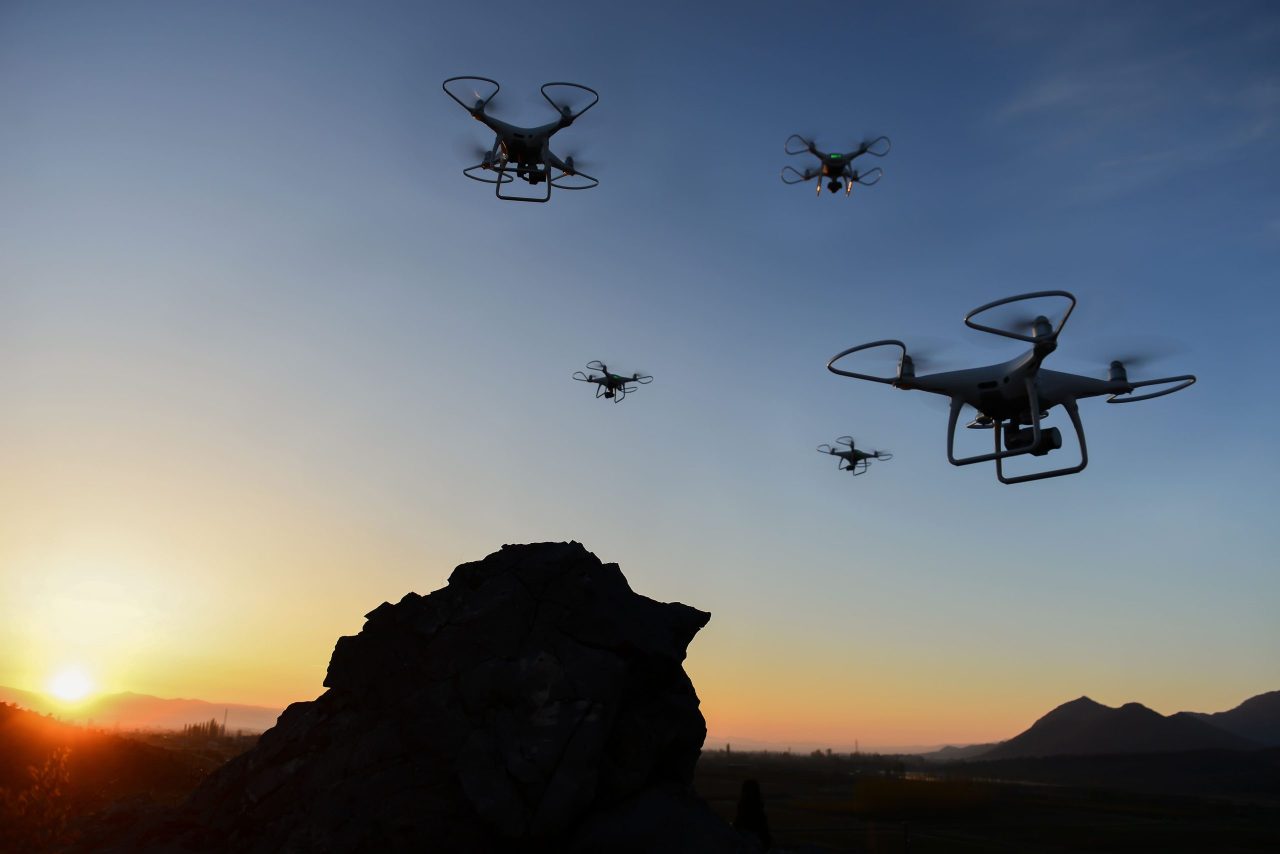
The evolution of drones in recent conflicts is accelerating the development of control systems that are more resilient to electronic warfare. Solutions such as advanced FPV drones, hybrid architectures and fiber-optic communication links are opening new perspectives in both civilian and industrial fields. This transformation marks the transition from drones as remote-controlled tools to drones as intelligent and adaptive systems.
The evolution of drones observed in recent conflicts, particularly in the Russia-Ukraine scenario, is accelerating a technological transformation that is set to have profound impacts on civilian and industrial applications as well. Next-generation unmanned systems are no longer simple platforms for imaging or reconnaissance, but rather adaptive tactical systems designed to operate in environments characterized by a high level of electronic warfare activity.
Human-Piloted Drones
The widespread adoption of FPV (First Person View) drones, operated in real time by human pilots through immersive headsets, has made direct control extremely precise while also exposing these systems to new vulnerabilities. These platforms rely on radio links to transmit video feeds and flight commands, making them vulnerable to interference, jamming and increasingly sophisticated GPS spoofing techniques. The pressure created by these countermeasures has triggered a cycle of accelerated innovation.
Fiber-Optic Connected Drones
One of the most significant solutions to emerge is the introduction of fiber-optic connected drones: small tethered aircraft that transmit data and control signals through an ultra-thin physical cable. This approach eliminates dependence on the radio spectrum, making the system essentially immune to electronic interference. At the same time, hybrid architectures are emerging, combining remote control, inertial navigation and autonomous capabilities based on computer vision algorithms.
Innovations developed in highly technological military environments are opening up new scenarios of interest for civilian applications as well. Drones designed to operate in communication-challenging environments could become key tools for complex industrial inspections, such as those carried out in energy plants, chemical facilities or critical infrastructure, where radio interference represents a significant operational challenge.
Civilian Applications
Fiber-optic-based solutions could also be applied in public safety contexts or environmental monitoring in dense urban areas, where high electromagnetic congestion can limit the reliability of traditional systems. Sectors such as advanced logistics and operations in underground or shielded environments could also directly benefit from these developments.
Finally, the integration of FPV platforms, artificial intelligence and partial autonomy is paving the way for increasingly resilient drones, capable of maintaining operational effectiveness through onboard AI while reducing dependence on continuous human control.
The ongoing evolution therefore represents a crucial transition: from drones understood as simple remote-controlled devices to drones conceived as intelligent, robust and adaptive systems. A transformation developed on the battlefield but destined to profoundly redefine the future of civilian and industrial applications.